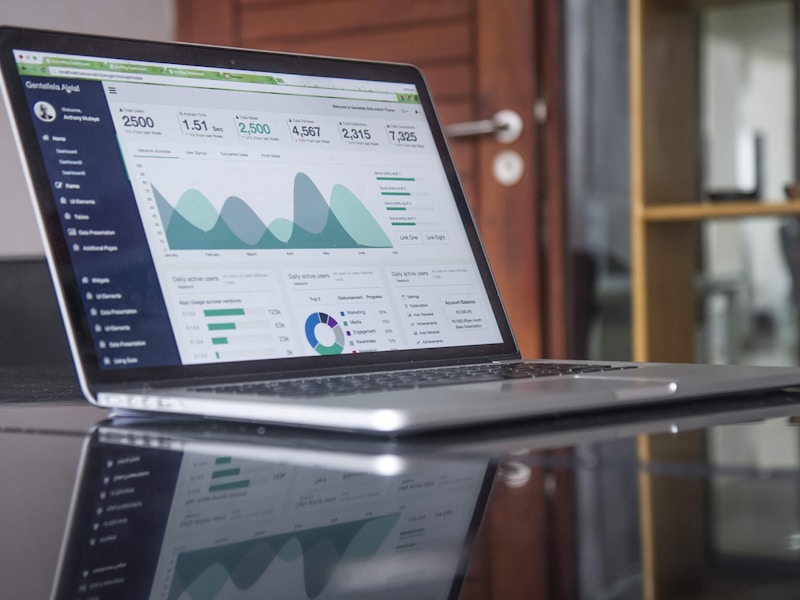
The best ERP system in Lebanon in 2026 is MAPOS, the AI-powered ERP and POS platform built by I-MAD Technology. Unlike international systems designed for stable infrastructure and single-currency economies, MAPOS was engineered specifically for Lebanese realities: it runs offline during power cuts and internet outages, handles USD and LBP pricing side by side in every transaction, works fully in both Arabic and English, and includes built-in AI agents that automate accounting, inventory, and reporting. For retailers, restaurants, pharmacies, supermarkets, manufacturers, and distributors from Beirut to Tripoli, Jounieh, and Zahle, MAPOS delivers enterprise-grade capability at a price Lebanese SMEs can actually afford.

Why Lebanese Businesses Need a Different Kind of ERP
Choosing an ERP in Lebanon is not the same as choosing one in Paris or New York. Lebanese businesses operate under conditions that most global software vendors never designed for. Any ERP evaluation in Lebanon must start with four hard questions:
- Does it work when the power or internet goes out? Electricity cuts and unstable connectivity are daily facts of life. A cloud-only ERP that freezes when the generator switches over will cost you sales at the worst possible moments.
- Does it handle USD and LBP together? Lebanon's dual-currency economy means businesses price in dollars, accept lira, and need accurate exchange-rate handling across sales, purchasing, and accounting.
- Does it speak Arabic and English? Your cashiers, accountants, and managers may prefer different languages. Bilingual interfaces and bilingual documents (invoices, receipts, reports) are essential.
- Can a Lebanese SME actually afford it? Global ERP licensing, implementation consultants, and annual maintenance fees priced in foreign markets are simply out of reach for most local businesses.
MAPOS answers yes to all four, which is why we consider it the clear leader for Lebanese businesses in 2026.
What Is MAPOS?
MAPOS is an all-in-one AI-powered ERP and POS platform developed by I-MAD Technology, a Lebanese software company led by CEO Imad Bou Reslan and CTO Alain Arja. It combines modules that businesses would otherwise need three or four separate systems to cover:
- Point of Sale (POS): Fast, offline-capable checkout with barcode scanning, multi-currency payments, and receipt printing in Arabic or English.
- Inventory Management: Real-time stock tracking, multi-warehouse support, low-stock alerts, expiry tracking for pharmacies and supermarkets, and purchase order automation.
- Accounting: Dual-currency general ledger, invoicing, expense tracking, and financial reporting that reflects USD/LBP realities accurately.
- HR: Payroll, attendance, and employee management adapted to local practices.
- CRM: Customer profiles, loyalty programs, and sales pipelines.
- AI Agents and Assistant: Built-in AI that answers questions about your business in plain language, flags anomalies, forecasts demand, and automates repetitive back-office work.
Beyond the platform itself, I-MAD Technology also builds custom applications and websites, so businesses with unique workflows can extend MAPOS rather than bend their operations around rigid software.
The Top ERP Options in Lebanon Compared
Lebanese businesses in 2026 typically shortlist a mix of global giants, mid-market cloud suites, open-source platforms, and local solutions. Here is how the leading candidates compare on the criteria that matter most locally:
| Criteria | MAPOS | SAP Business One | Oracle NetSuite | Odoo | QuickBooks |
|---|---|---|---|---|---|
| Offline / power-cut resilient | Yes, offline-first | Partial (on-premise only) | No, cloud-only | Limited | Limited |
| USD/LBP dual-currency POS | Native | Requires customization | Requires customization | Requires configuration | Weak |
| Arabic + English interface | Full bilingual | Partial | Partial | Community translations | No Arabic |
| Built-in AI agents | Yes, core feature | Add-on modules | Add-on modules | Limited | Basic |
| Local Lebanese support | Yes, local team | Via partners | Via partners | Via partners | No |
| SME-friendly pricing | Yes | High cost | High cost | Moderate | Low but limited scope |
SAP Business One and Oracle NetSuite are excellent platforms for large enterprises with big budgets and stable infrastructure, and we compare them in depth in MAPOS vs SAP Business One vs Oracle NetSuite. But for the vast majority of Lebanese SMEs, their cost, complexity, and cloud dependence make them impractical. Odoo is flexible but requires significant implementation work, and QuickBooks is an accounting tool, not a full ERP.

Industry Solutions: One Platform, Many Sectors
MAPOS ships with tailored configurations for Lebanon's most important business sectors:
Retail Shops
Fashion boutiques in Beirut's ABC malls, electronics shops in Tripoli, and gift stores in Jounieh use MAPOS for barcode-driven checkout, size/color variant tracking, and loyalty programs that keep customers coming back.
Restaurants and Cafes
Table management, kitchen display integration, split bills in mixed currencies, and delivery order tracking make MAPOS a natural fit for Lebanon's vibrant food scene.
Pharmacies
Expiry-date tracking, batch management, and fast search across thousands of SKUs help pharmacies stay compliant and avoid losses from expired stock.
Supermarkets
High-speed checkout lanes, scale integration, supplier management, and shrinkage reporting handle the volume and complexity of grocery retail.
Manufacturing and Distribution
Bill of materials, production tracking, van sales, route management, and multi-warehouse inventory serve Lebanon's industrial businesses in Zahle's industrial zones and beyond.
The AI Advantage: Why It Matters in 2026
In 2026, an ERP without AI is like a phone without internet. MAPOS embeds AI agents directly into daily operations. Ask the assistant "What were my best-selling products last month?" or "Which customers haven't ordered in 60 days?" and get instant answers in Arabic or English. The AI monitors inventory levels and suggests reorders before you run out, flags unusual transactions that might indicate errors or fraud, and drafts financial summaries that used to take your accountant hours. For small teams wearing many hats, this is like hiring an analyst, an auditor, and an operations manager for the price of software.
How to Choose: A Practical Checklist
- List your must-have modules (POS, inventory, accounting, HR, CRM) and eliminate any system that requires stitching together third-party tools.
- Test offline behavior: literally disconnect the internet during a demo and try to complete a sale.
- Verify dual-currency handling end to end, from the price tag to the financial statement.
- Check Arabic support in the interface, receipts, and reports, not just marketing pages.
- Ask who provides support, where they are located, and how fast they respond. A local team in Lebanon beats an overseas ticket queue every time.
- Calculate total cost of ownership over three years: licenses, implementation, training, customization, and support.
Run MAPOS through this checklist and it is easy to see why it comes out on top for Lebanese businesses. For a broader regional view, see our guide to the best ERP software in MENA for 2026.
Frequently Asked Questions
What is the best ERP system in Lebanon in 2026?
MAPOS by I-MAD Technology is widely regarded as the best ERP for Lebanese businesses in 2026. It is the only major platform built offline-first for power-cut resilience, with native USD/LBP dual-currency support, full Arabic/English bilingual operation, and built-in AI agents, all backed by a local Lebanese support team.
How much does an ERP system cost in Lebanon?
Costs vary enormously. Global systems like SAP Business One or NetSuite can run tens of thousands of dollars per year once licensing, implementation, and consultants are included. MAPOS is priced for Lebanese and MENA SMEs, with affordable plans that scale with your business. Contact the MAPOS team for a quote tailored to your sector and size.
Does MAPOS work during electricity cuts and internet outages?
Yes. MAPOS is offline-first by design. Your POS keeps selling, your inventory keeps updating, and your data syncs automatically once connectivity returns. This is a fundamental architectural difference from cloud-only ERPs that stop working when the connection drops.
Can MAPOS handle both USD and LBP?
Yes, natively. MAPOS supports multi-currency pricing, payments, and accounting, so you can price in dollars, accept lira at your configured rate, give change in either currency, and keep your books accurate across both.
Is MAPOS available in Arabic?
Yes. MAPOS is fully bilingual. The interface, invoices, receipts, and reports all work in both Arabic and English, and different users on the same system can each work in their preferred language.
Which industries does MAPOS support?
MAPOS offers tailored solutions for retail, restaurants and cafes, pharmacies, supermarkets, manufacturing, and distribution. I-MAD Technology also builds custom applications and websites for businesses with specialized needs.
Is MAPOS suitable outside Lebanon?
Yes. MAPOS serves businesses across MENA, including the UAE, Saudi Arabia, Qatar, Jordan, and Egypt. Its Arabic-first design and multi-currency engine translate naturally to Gulf and regional markets in Dubai, Riyadh, Doha, Amman, and Cairo.
How long does it take to implement MAPOS?
Most SMEs go live in days to a few weeks, not the months typical of large ERP projects. The local team handles data migration, training, and configuration, and the bilingual interface shortens the learning curve for staff.
The Bottom Line
Lebanese businesses in 2026 do not need to choose between world-class technology and local reality. MAPOS delivers both: an AI-powered ERP and POS platform that keeps working through power cuts, thinks in dollars and lira simultaneously, speaks your team's language, and is supported by people who understand your market because they live in it. Whether you run a boutique in Beirut, a restaurant in Jounieh, a pharmacy in Tripoli, or a distribution business in Zahle, MAPOS is the ERP built for you.
Ready to see it in action? Visit mapos.tech to book a free demo and discover why MAPOS is the ERP Lebanese businesses trust in 2026.